

EmpCo explained: what the EU's anti-greenwashing rules mean for your climate claims
Discover this blog post
"Climate neutral." "Eco-friendly." "Net zero by 2040." For years, claims like these were mostly a marketing decision. In the EU, that era is over. Since 27 September 2026, environmental claims made to consumers fall under binding rules, and the evidence behind them has become just as important as the message itself.
In this blog we explain what EmpCo is, why it matters, how it connects to the Ecodesign for Sustainable Products Regulation (ESPR), and what carbon accountants and sustainability consultants can do with it today.
What is EmpCo?
EmpCo, short for Empowering Consumers for the Green Transition (Directive 2024/825, also known as ECGT), is the EU's directive against greenwashing in consumer communication. It amends existing EU consumer protection law, which means misleading green claims are now treated as unfair commercial practices.
In practice, EmpCo introduces three key changes:
- Offset-based neutrality claims are banned. Product claims such as "climate neutral" or "CO₂ compensated" that rely on carbon offsetting are no longer allowed. Companies can still invest in offsetting projects, but they can't use them to claim a product has a neutral or reduced climate impact.
- Generic claims need proof. Vague terms like "green", "eco-friendly" or "sustainable" are banned unless the company can demonstrate recognised excellent environmental performance relevant to the claim.
- Labels need certification. Sustainability labels must be based on a certification scheme or established by public authorities. Self-made "green" badges no longer pass.
On top of that, future performance claims such as "net zero by 2040" must be backed by a detailed and realistic implementation plan with measurable, time-bound targets, verified by an independent expert.
Who does it apply to?
EmpCo applies to every company making environmental claims to consumers in the EU, regardless of company size. The scope is B2C: business-to-business communication is not covered.
When does it apply?
EmpCo has applied since 27 September 2026, with no transition period. Implementation across Member States has been uneven: only 7 of the 27 transposed the directive into national law on time. That doesn't buy companies extra time, though. The application date stands, and companies selling across several EU markets should prepare for the strictest interpretation.
Why EmpCo matters
EmpCo turns climate data from a reporting exercise into a communication asset. Every claim a company makes toward consumers now needs a defensible basis, and in most cases that basis is carbon data: a GHG inventory to support claims about current performance, and a credible mitigation plan to support claims about the future.
The risks of getting it wrong are concrete: enforcement by consumer authorities, fines, cease-and-desist orders, and reputational damage. The opportunity is just as real. Companies with robust, auditable data can keep communicating confidently about their climate efforts while competitors fall silent.
A note on the Green Claims Directive: this proposal would have added more detailed rules on how to substantiate claims, but it is currently on hold. For now, EmpCo is the binding framework.
ESPR: from claims to the products themselves
Where EmpCo regulates what companies say about their environmental performance, the Ecodesign for Sustainable Products Regulation (ESPR, Regulation 2024/1781) regulates the products themselves.
- What: ESPR sets requirements for durability, repairability, recycled content and environmental footprint, as well as the information that must travel with a product through a Digital Product Passport (DPP). ESPR is a framework regulation: the concrete requirements are defined per product group in separate implementing rules.
- When: ESPR has been in force since July 2024. Iron and steel come first (rules expected in 2026, applying around 2028), followed by textiles, tyres and aluminium (planned for 2027), furniture (2028) and mattresses (2029).
- Who: Manufacturers, importers and distributors placing products from these groups on the EU market, including companies based outside the EU.
For many product groups, carbon footprint information will become part of the product's mandatory data. That makes product-level footprinting a compliance requirement rather than a nice-to-have.
One shared foundation
EmpCo and ESPR approach sustainability from different angles, but they rely on the same foundation: a robust, auditable carbon footprint at both corporate and product level. Companies that invest in reliable carbon accounting now will be ready for both, and can reuse the same data for claims, product passports and reporting.
What carbon accountants can do now
For carbon consultants, EmpCo creates an immediate and practical service opportunity. The first step is simple: screen your clients' current communication against the new rules.
- Do they make claims that are now banned, such as offset-based "climate neutral" claims?
- Can they substantiate their other green claims with data?
- Do their future targets have a verified plan behind them?
Often, the answer leads straight back to core carbon accounting work: a GHG inventory as evidence for current claims, and a mitigation plan as evidence for future ones.
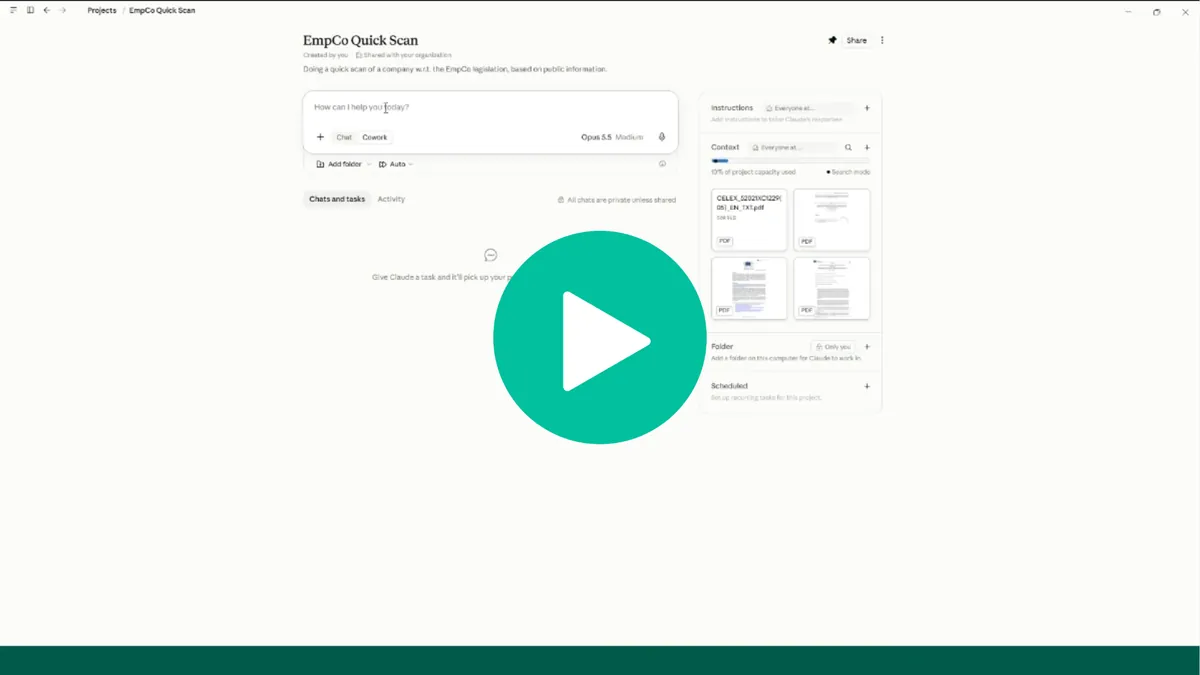
To help you get started, we've created an AI skill for a first EmpCo screening, together with the relevant legislative documents. Here's how it works:
Please note: this is a first, time-boxed screening and does not constitute legal advice.
Conclusion
EmpCo makes one thing clear: in the EU, green claims are only as strong as the data behind them. With ESPR adding product-level requirements step by step, carbon data is moving from the sustainability report into marketing, product design and compliance. Companies that build a solid carbon footprint now won't just avoid greenwashing risks. They'll be the ones still able to tell their climate story credibly.
About Carbon+Alt+Delete
We provide carbon accounting software for sustainability consultants and consultancies that guide companies towards net zero.
Curious to discover how our software can improve your carbon accounting services?
Feel free to reach out to [email protected] or book a meeting to talk to one of our experts here.